Kaan Martin Oytac, 17, Kelowna, BC
I don't wait to solve my world's problems.
I’m working on them now. Three so far.
-
Problem 01
Wildfires
Detection technology costs too much and is privatized. I co-founded Wildfire Alarm and built an open-source version a town can place itself: custom board, firmware, solar, everything on GitHub.
5 sensors built. 2 online in Kelowna. 435,000+ readings. Burn-test data published.
-
Problem 02
Education
Kids at my school weren't failing because they couldn't learn. Nobody had time to sit with them. Alp and I co-founded Husky Harmony, a peer-tutoring club.
138 members, 2 schools, a third joining. It runs on days I'm not there.
-
Problem 03
AI and us
Nobody was asking what growing up with AI does to what we expect from real people. I built a survey to measure it and published a 20-page paper.
Sole author. Seven-month ethics review. Accepted Oct 15, 2026.
Wildfire Alarm
The problem
Early-detection technology for wildfires exists, but it sits inside companies that sell to governments and big landowners. Small towns, where most fires start (in Kelowna about 40% of fires are human-caused), can't afford it, so they wait for help.
In summer 2023 I saw that twice: a wildfire in Bodrum, Turkey, while I was there, and a few weeks later the McDougall Creek fire at home in Kelowna. What stayed with me was how long help took to arrive. Every house has a smoke alarm. Why doesn't a town?
What I personally built
A version a town can build and place itself, without waiting for the local government, with all of it online. The commit log is public, so this is the exact split.
| Part | What I did | With others |
|---|---|---|
| Firmware and detector | In 2025 Josh and I wrote the first Arduino firmware by hand at lunch: I did the sensor side, he did the sending. In September 2026 I rebuilt the on-board detector and the Notecard firmware with Claude Code as a pair programmer. I wrote the spec, chose the thresholds, read every line, ran the host-side tests and merged the pull requests under my account. The detector learns each node's own baseline and scores PM, gas and humidity together, so dust and a barbecue don't trip it. There is no neural network on the board. | Josh Kroeker, 2025. AI pair programmer, 2026. The commits say Claude, the merges say me. |
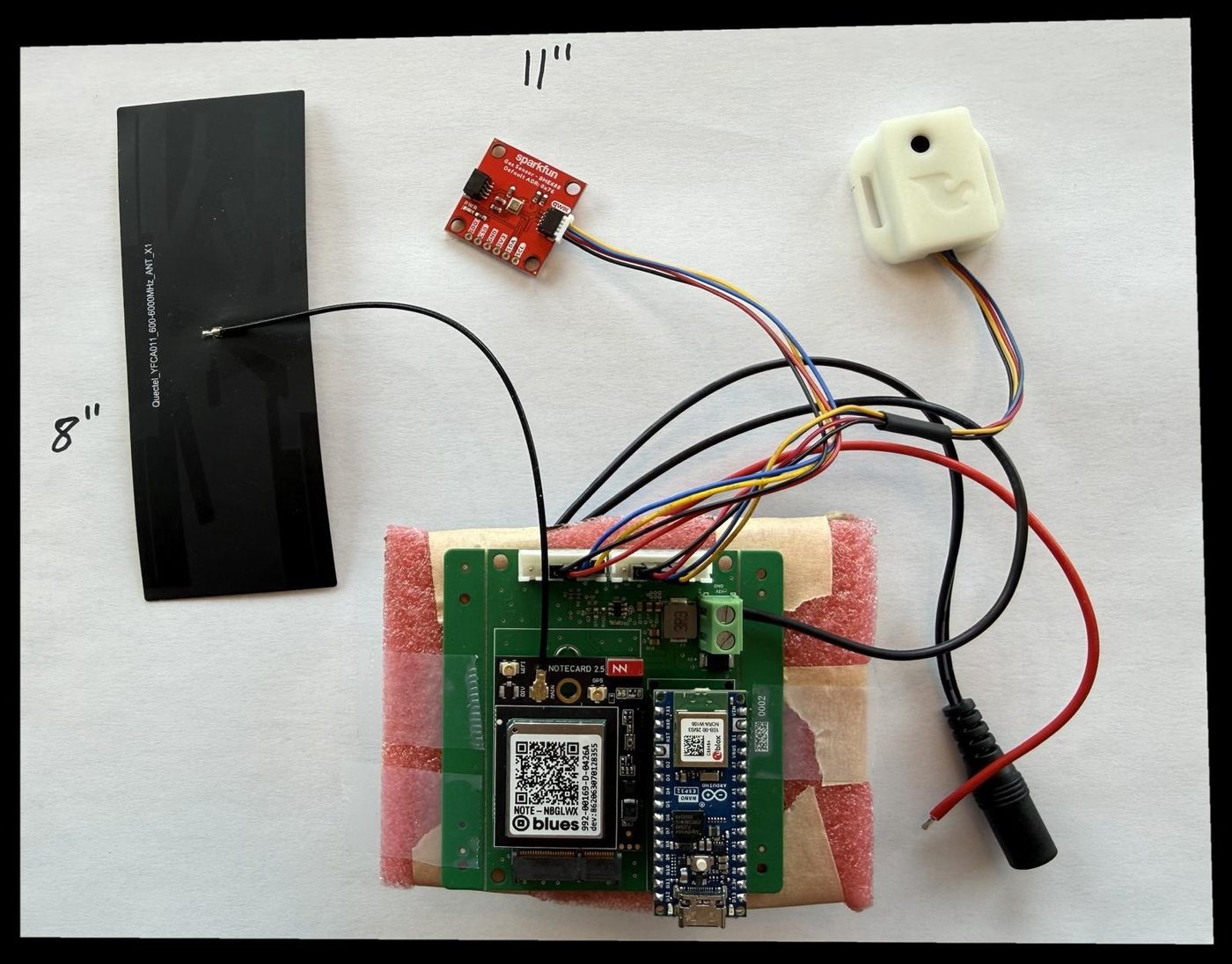
| Sensors and circuits | Wired and integrated the Bosch BME688 (gas, temperature, humidity, pressure) and BMV080 (PM1, PM2.5, PM10) over I2C to the Arduino Nano ESP32. Debugged with a multimeter, a logic analyzer and an oscilloscope. One reading every 30 seconds. | Me. |
| Carrier board, Rev A | Specified the board, brought up and tested the five boards, logged the known issues for Rev B (no battery voltage sensing, no antenna on the board, a reverse-polarity diode with no fuse, and more). My own first layout, in KiCad in November 2025, didn't work. It's still in the repo archive. | Rev A layout done with our engineer mentor. Five boards made by JLCPCB. |
| Link and power | Integrated the Blues Notecard for cellular and satellite connectivity, so a node reports from a hillside with no Wi-Fi. Added a solar panel charging a LiFePO4 battery so a unit can live outdoors. | Me. |
| Data and alerts | Grafana first, to see the readings at all. Then our own stack: an API that stores readings, scores anomalies and sends alerts, and a dashboard with a live map. I wrote what they had to do, fed them test data, and in September 2026 merged the Notehub ingress, incidents and email-alert work into the API under my account. I didn't write most of that code. | Josh wrote the first API and dashboards (2025 to spring 2026). Berat Kaya maintains the API, dashboard and infrastructure now; most commits there since September are his. |
| Burn tests | Designed and ran every test: the pizza oven in the driveway, the controlled burns, the Oct 18 burn with node biobot-002, the Nov 3 fire by Okanagan Lake. Measured distance with a tape measure. | Me, with my dad holding the phone. |
| Talks | Five-minute talk on Wildfire Alarm at the AI Industry Founding Workshop in Istanbul, Oct 22, 2026. | With Alp. A professor from Yeditepe University's AI group offered to work with us on a Turkish pilot afterwards. |
How it went
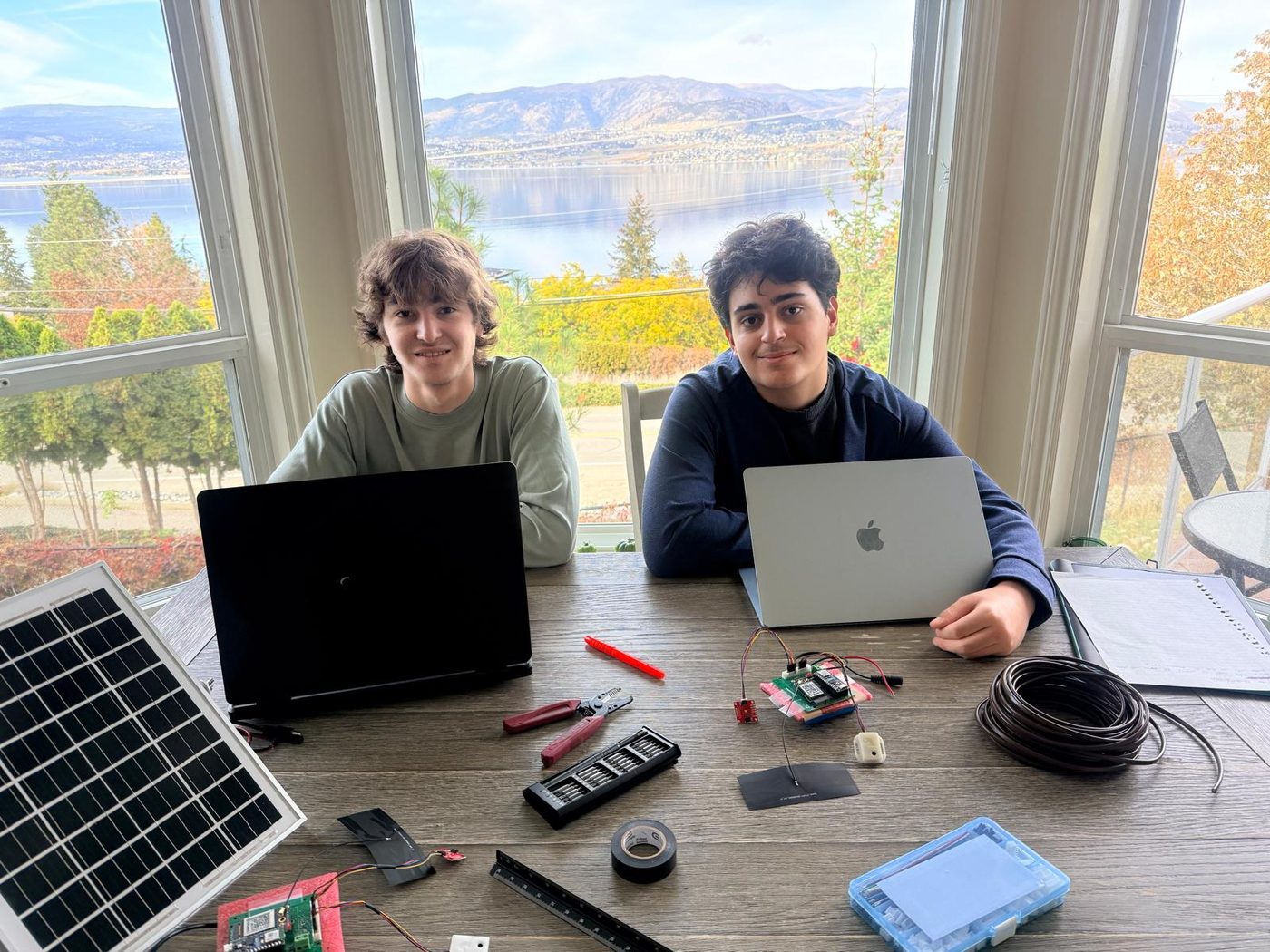
v1 was a jumble of wires in a red box: an Arduino Nano ESP32, a Bosch BME688, a Bosch BMV080, a breadboard. About the size of a baseball. I finished CS assignments early so Josh and I could use the class computers at lunch to write firmware.
First detection test: winter, our driveway. I was too worried to light an open fire, so I burned fuel in a portable pizza oven, in snow boots a size too big. PM10, PM5 and PM2.5 spiked in Grafana. I checked the distance with a tape measure: about 16 m. In a later test it caught smoke through an obstruction at 6.78 m in under 3 minutes.
Then the hard part. The Rev A boards came back from JLCPCB in September 2026. One ran for a day. I took it apart, put it back together, and neither I2C sensor showed up. Weeks of debugging. The Rev B list in the README is what that month cost me.
On October 18, 2026, node biobot-002 sat next to two small ignitions and two quiet periods. It raised an alert on its own at 16:04, PM2.5 at 88 µg/m³ against a learned baseline of 5.2, and cleared it three and a half minutes later. At 17:12 its particulate sensor reported a fault. That's in the dataset too. The export removed 1,224 duplicate rows out of 2,394. All of it is published.
Nov 3, 2026: one sensor, one small controlled fire, two metres away. Before and after:
| PM1 | PM2.5 | PM10 | Gas resistance | |
|---|---|---|---|---|
| Before | 2 | 4 | 4 | 54.76 kΩ |
| After | 19 | 42 | 58 | 28.25 kΩ |
What the data says
Field, measured
- Alert raised by the node itself at 16:04:08, PM2.5 88 µg/m³ against a learned baseline of 5.2.
- Control period with no fire: PM2.5 median 0, max 1, severity none throughout.
- Smoke detected through an obstruction at 6.78 m in under 3 minutes.
- Two nodes reporting every 30 seconds outdoors since fall 2026. 435,000+ readings on our dashboard; a per-day export for GitHub is on my list.
Model, not yet proven in the field
- I built a placement model from 13,443 BC Wildfire Service records, 1950 to 2025, with AI tools, and checked it by hand against 28 fire case files.
- On a 500 m grid, in the model, the nearest downwind sensor raised the alarm within 4 to 6 minutes in 8 of 11 large fires that started inside the study area.
- Smith Creek, 2014: reported as a grass fire at 1:20 pm, about 2 hectares by the time the emergency centre opened. In the model a sensor flags it at 4.5 minutes, when it was smaller than a tennis court.
- That grid is where the 1,552 target comes from.
The 8 of 11 and the Smith Creek number are model results. I haven't put sensors around a real burn and watched the model be right. The next burn, with several sensors at measured distances, is the test that matters. If it's wrong, I'll change the grid and post that.
Receipts
- Live site, with Turkish version
- wildfirealarm.org
- Everything public: firmware, board files, API, dashboard, data
- github.com/wildfirealarm-org
- Oct 18, 2026 burn-test dataset, CC BY 4.0
- data/burn-tests
- Firmware and on-board detector
- firmware
- Rev A board: Altium source, Gerbers, BOM, Rev B issues
- hardware
- Field test video, Nov 3 (1:26)
- top of page
- Device walkthrough (2:12)
- above
Who else
- Josh Kroeker, my classmate, co-founded the original prototype with me in 2025. We wrote the first firmware together at lunch, and he built the first API, server and Grafana dashboards. Josh left the project in September 2026. The work since then (solar, the rebuilt detector and firmware, the new site, the field tests) was done without him.
- Alp Topcu, my stepbrother, is a co-founder. He runs the supporter side: sign-ups, member roles, outreach. He presented with me in Istanbul.
- Berat Kaya, a computer engineering student at Fırat University in Turkey, joined as a co-founder in September 2026. He maintains the cloud API, the dashboard and the infrastructure, exported and published the Oct 18 burn-test data, and is building the Turkish side.
- A professional electrical engineer in Kelowna mentors the hardware. He caught the power-path mistakes in my schematic, and the Rev A layout was done with his help. I did the wiring, bring-up and debugging.
- My dad, Engin, has started companies himself and helps with the supporter model and the Turkish contacts. The first upload to the GitHub org, in April 2026, came from his company's account because I didn't have mine set up yet. Later commits are under each contributor's own name.
Build log
- Summer 2023Bodrum, then Kelowna. The question starts.
- 2025Red box prototype with Josh. Pizza oven test in the driveway, about 16 m.
- Nov 2025First board layout in KiCad. Abandoned, archived in the repo.
- Apr 2026Public repos opened. Dropped the LoRa and Meshtastic mesh plan for the Notecard. One radio less to get wrong.
- Jun 15, 2026Rev A schematic. Five boards ordered from JLCPCB.
- Sep 2026Boards back. One ran for a day, then lost both sensors. Detector and firmware rebuilt. Solar charging added. Josh leaves, Berat joins.
- Oct 2026BioBot becomes Wildfire Alarm. New site, with a Turkish version. Two nodes reporting outdoors.
- Oct 18, 2026Burn test, node biobot-002. Dataset published Oct 26.
- Oct 22, 2026Five-minute talk with Alp at the AI Industry Founding Workshop, Istanbul. The next day, students at my school agreed to build the next batch of sensors.
- Nov 3, 2026First field test on video. One sensor, a real controlled fire, 1 min 26 s.
Husky Harmony
The problem
I kept overhearing students say "math isn't for me." They weren't failing because they couldn't learn. Nobody had time to sit with them. The school had strong students and struggling students in the same building and nothing connecting them.
What I built
Alp and I started Husky Harmony to connect them. It took two tries.
Version one failed
The first version paired a tutor and a student online. It made sense on paper and it did not work: matches were made, sessions did not happen, and the pairs faded out within weeks. We didn't change the goal. We changed the design.
Version two: a room, twice a week
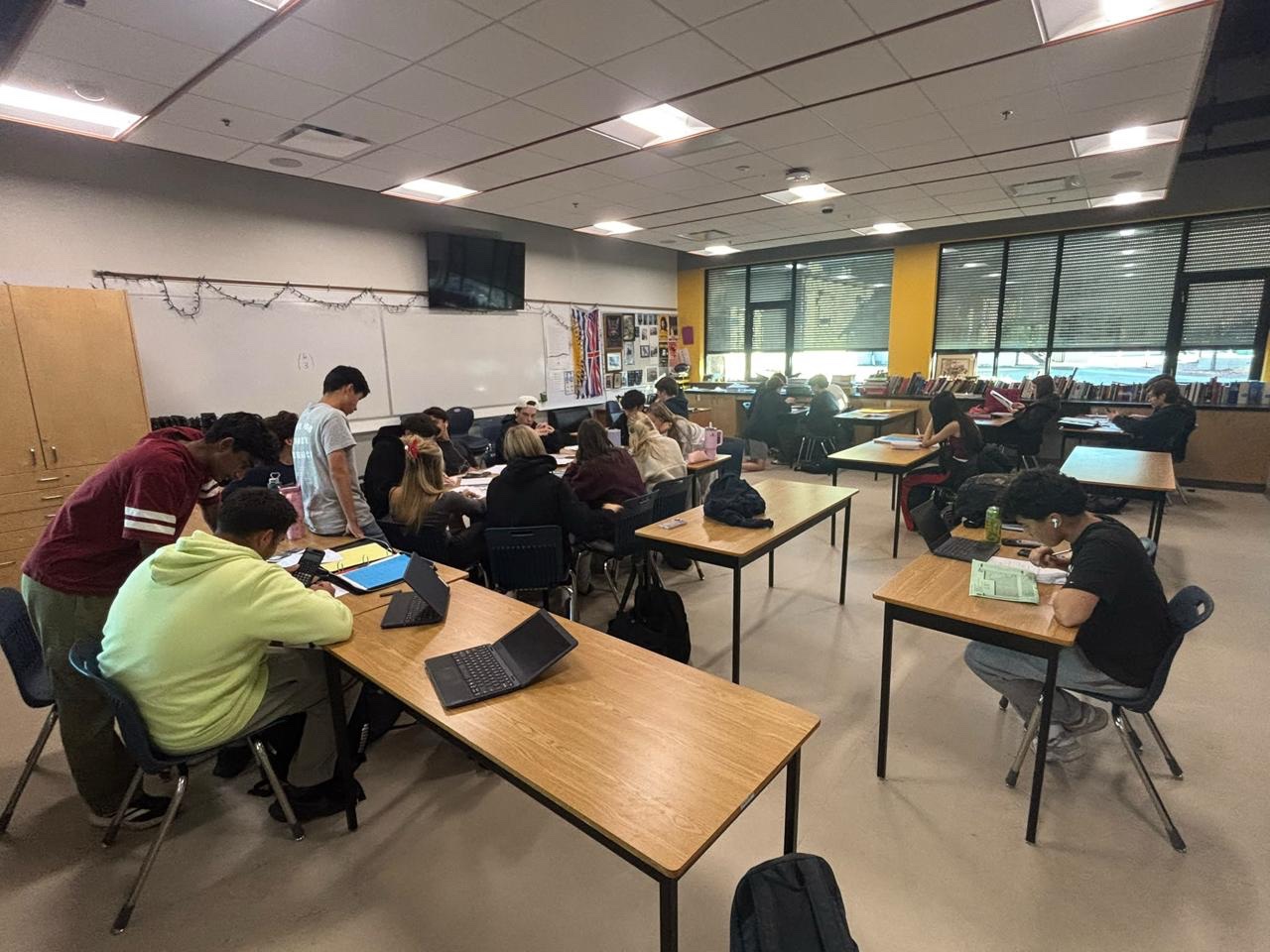
Version two was a room, Tuesday and Wednesday after school, no sign-up. Walk in with a problem, sit down with a tutor. That worked. I tutored both days for more than two years and scootered home through snow and rain. Four students who were failing all passed. It started with math and now covers every subject.
Getting schools and tutors
The hard part was never the tutoring. It was getting a school to say yes and getting enough tutors to make the room reliable. I presented to classes to recruit, pitched the program to teachers and administrators, and trained 20 tutors and 5 officers so the room runs on days I am not there. The second school came after the first one had numbers to show.
Where it stands today
| Item | Status |
|---|---|
| Members | 138, across two schools |
| Sessions | 156, about 700 volunteer hours |
| Tutors | 20 trained, 5 officers |
| Third school | In progress. KSS accepted us and asked us to work with international students. We are building the tutor base there and collecting parent permission letters before sessions can start. |
Who did what
- Me: co-founder and president. The format change, the class presentations and pitches, tutor training, and tutoring every Tuesday and Wednesday since 2024.
- Alp Topcu, my stepbrother: co-founder. Built it with me from the first version.
The AIA Scale
The problem
Nobody was asking what growing up with AI does to what we expect from real people. If a teenager treats an AI like a person, and uses it a lot, does that change what they expect from friends and family? I couldn't find a scale that measured it.
What I built
I built the scale from the existing literature, with items for how much a person anthropomorphizes AI and how intensely they use it. I ran an anonymous survey among students at my school, then analyzed the data myself: means, standard deviations and significance tests, to find and check the correlations. About 20 pages in the end.
What was hard
The research ethics review took seven months. Surveying minors about their relationships is exactly the kind of study a review board looks at carefully, and every version of the consent form, the anonymity design and the items went back and forth until it passed. After that came the revisions to meet the journal's publication standards, which were extensive. The paper was accepted by the Curieux Academic Journal, a youth-led journal with student reviewers, on October 15, 2026.
Where it stands today
| Item | Status |
|---|---|
| Scale | Built from the literature, two parts: anthropomorphism and use intensity |
| Survey | Anonymous, students, complete |
| Ethics review | Passed, after seven months |
| Paper | Accepted Oct 15, 2026. Sole author. |
Other things I've built
-
ClickPrompt.ai
Product, live, 2025 to 2026
Problem: After my Vanderbilt University course on prompt engineering, I realized people knew what they wanted from AI but froze at the blank prompt box.
What I built: I co-founded ClickPrompt.ai, which helps build plain-language ideas into structured prompts through a decision tree. As product lead, I led beta tests and used user feedback to design an equitable UI/UX: an intuitive prompt-management interface where users can store and create prompt templates. Berat Kaya built the core; Alp did the learning experience.
Where it stands: Purely through organic growth, 220 users worldwide, about 500 prompts in English, Chinese and Spanish.
clickprompt.ai -
The Friends of 91 Live Beyond Googol Street
Number theory, finished, submitting Dec 2026
Problem: Add up a number's divisors and divide by the number. Two numbers are friends when they get the same answer. Nobody knows whether 91 has a friend; it is one of the small numbers mathematicians have never settled. I saw a lab solve a math problem with AI and thought, why don't I solve one myself?
What I built: A computer-assisted proof using SymPy, a search tree and factoring software, on 91 and, less deeply, 14, 15, 46, 62 and 94. Any friend of 91 would have to be odd, carry 13 to an even power, be coprime to 3, 5 and 7, have at most four prime factors to an odd power and at least 7 distinct prime factors, and be larger than 10100. An AI coding assistant helped with the code and certificates, and the README says so. An audit of v1 found defects; v2 fixes them and says so.
Where it stands: Paper finished, submitting December 2026. Code public and archived on Zenodo, so anyone can rerun it.
github.com/kaan-oytac/friends-of-91 -
Kazit, also called The Game
World-building, since 2013
A planet (Gloop) and an empire (Kazit) my Turkish best friend and I have built since we were 4. A game with toys slowly turned into a world with its own creatures, countries, government, technology, history and conflicts. Its founding figure, Isirik, started as a gecko keychain from Ibiza. Now: maps, cityscapes I taught myself to draw, a language with written suffix and conjugation rules (dashlotsatosbaqa: the nostalgic smell of home), and a novel in progress, The Pursuit of Happiness, about Istil, a 24-year-old field service technician who uncovers a conspiracy in the Kazitian Empire. I never wrote voluntarily before this.
Conlang with documented grammar. Novel draft: 80+ pages. Ongoing.
-
The Benefits of Awkwardness
Talk, TEDx Kelowna Youth, 2024
I changed schools 8 times in 11 years, between Turkey and Canada, and was the awkward new kid every time. The talk is about using that instead of waiting for it to pass.
Also: food bank volunteer, restocking, screening donated food for safety and packing baskets for about 100 families a day. Six days on foot to Egypt Lake in the Rockies.
How I use AI
I think AI is the best opportunity for our generation. AI has made it possible for me to create. AI has liberated information, intelligence, experience and knowledge. Now I have the knowledge and experience of a PhD at my fingertips. All I have to do is ask, so I ask, and I use AI all the time.
Here's what I use AI for, and what I don't:
- I use AI to see different perspectives, to analyze, to understand, to learn about the problem.
- I use AI to get to the minds of the experts who are already handling these issues.
- I use AI to help me create.
- I don't use AI to think for me.
- I don't use AI to write for me, but I do ask AI to write so I can compare my writing with it.
- I do use AI to code. It is stupid not to code with AI now. But I don't use AI to code at school or to do any schoolwork, because I believe I need to know how to think. I need to be independent of AI, intelligence-wise.
AI has made me smarter, faster and more effective. With it I've been able to solve problems I couldn't have solved: satellite communication, designing boards, analyzing the history of wildfires in the Okanagan and coming up with a model. Now a 17-year-old can analyze 75 years of wildfires in the Okanagan and come up with the right model for sensors. I also solved a math problem with AI, after I saw that one of the labs was able to solve a problem with AI. I said, why don't I solve one myself? That's the power of AI and I love it.
But I also know the drawbacks. I wrote a paper about how it affects our expectations in relationships. AI can make us dumb, because we don't question and think as much. It can make us lazy. So I consciously pay attention to how much of the thinking I let AI do and how much of it I do.
Not finished yet
- UnprovenThe 500 m placement model. It's a desk model. I haven't tested it around a real burn.
- Waiting3 sensors in a box, waiting for a host with a safe spot and a view of the sky.
- On my listA per-day readings export on GitHub, so the 435,000+ number has a public receipt.
- Finished"The Friends of 91 Live Beyond Googol Street." Finished, not submitted. December.
- DraftThe Kazit novel. Still on the diary entries.
- OngoingGraphing calculator features. Nobody asked. I keep adding them.
- PlannedThe Turkish side of Wildfire Alarm. The site exists at wildfirealarm.org/tr. The sensors in Turkey don't yet.
What's next
Next: several sensors around a planned burn at measured distances, to see if the 500 m spacing holds against a real plume. That means more sensors in the field. Students at my school are building the next batch from the public design files; the three finished units go to hosts first. Rev B fixes the known-issues list.
The sensor is the small part. A node outdoors lives or dies by its power, and right now our panel and battery are off the shelf. I want to understand energy storage well enough to design that part instead of buying it. That's why I keep reading about nanostructured materials and batteries, and why I want to study engineering physics. What I mean by climate resilience is a box on a post that still works in February.
I have 5 sensors, a model and a Rev B list. I can look up what a lecture would teach me. I can't look up what someone who has shipped ten thousand boards would say about that list. I have built this with a pizza oven and five boards from China. I want to see how far it goes.
What I think is coming
I believe we are on the verge of a cycle. Change leads to chaos, chaos leads to change. And I believe this is going to be the norm. So the next generations will need to be comfortable with change, comfortable with chaos, comfortable with the unknown. That requires a certain mindset. I had to manage change and chaos all my life, 8 schools in 11 years, and I already see the positive effects of it.
I also believe there will be great opportunities in this cycle. More problems will rise. With AI, it won't be that we solve all the problems. Instead, there will be many more problems for us to solve, and which problems we really focus on will be the key. And last, I think we are heading to a new frontier, and nobody knows what's next.
About
I'm Turkish and Norwegian on paper, Turkish and Canadian in practice. English and Turkish at home. I translate a lot: for my grandmother when she visits (menus, signs, what people actually mean), for lost tourists in Istanbul.
At night, when nothing else is due, I write code for my graphing calculator because I want to see if it can be done. The other place I lose track of time is jazz. My best friend and I have been building a fictional world since we were 4.
Tools: C/Arduino, MicroPython, Java, JavaScript, KiCad, oscilloscope, logic analyzer, Grafana, Supabase, Next.js.
Awards and school
| What | Detail | Year |
|---|---|---|
| Yale Young Global Scholars | Yale University. One of about 2,000 students selected worldwide, from 150+ countries, acceptance rate about 14%. Took a course at Yale and did research using the Yale Library. | 2026 |
| Wolf Scholars nominee | Nominated by my school for the University of Toronto's Wolf Scholars Program. Each school nominates one student; 16 students in Canada receive full tuition, a living stipend, funded travel and internships. | 2026 |
| SAT 1530 | 800 Math, 730 Reading and Writing. Top 1% in the US. Highest score in my school's history. | 2026 |
| Math and physics | Took all the most demanding math, physics and computer science courses my school offers, 100% in each. AP Physics: 5 out of 5. Teacher's assistant for the Grade 12 physics class, chosen by my physics teacher. | 2024 to 2026 |
| Average | 97% | Grade 12 |